
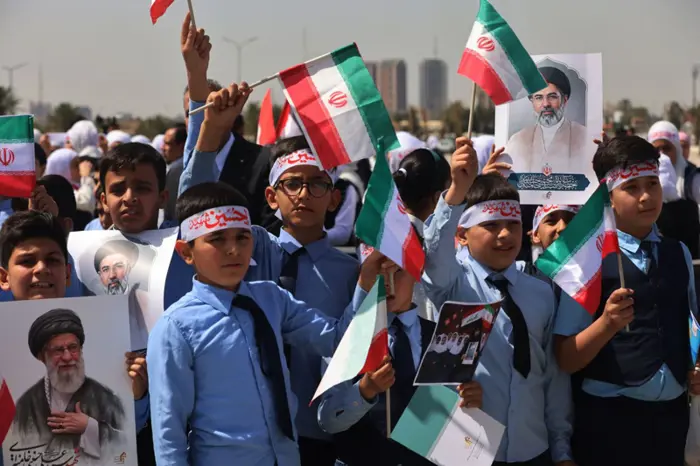
Iraqi schoolchildren hold portraits of Iran's supreme leader Ayatollah Mojtaba Khamenei and Iran's slain supreme leader Ayatollah Ali Khamenei (left) during an anti-US and Israeli demonstration in Baghdad on April 7, 2026. Iran said critical infrastructure, including two bridges, was struck on April 7 by the United States and Israel, with US President Donald Trump warning "a whole civilisation will die" if a midnight deadline for a deal to open the Strait of Hormuz was not met. The strikes came as Iran's Revolutionary Guards warned they would deprive the United States and its allies of oil and gas if Washington crossed Tehran's "red lines". -- Photo by AHMAD AL-RUBAYE / AFP
KUALA LUMPUR (Bernama): Malaysia has urged its citizens to remain vigilant and defer non-essential travel to conflict-hit areas in the Middle East as the Foreign Ministry closely monitors the escalating security situation in the region.
It also urged Malaysians intending to return home to act decisively and secure commercial flights while options remain available, given the unpredictability of airspace closures.
As the conflict persists and the security situation continues to deteriorate amid escalating rhetoric and the imminent risk of retaliatory attacks, the ministry said its focus remains on the safety, security and welfare of Malaysians residing in or travelling through the affected areas.
"At this time, the ministry confirms that all registered Malaysians who have been contacted remain safe, and there are currently no reports of Malaysians being stranded,” the ministry said in a statement.
The Foreign Ministry said the Travel Advisory issued on March 5, which advises Malaysians to defer all non-essential travel to countries affected by the conflict, remains in full effect.
It also stated that Malaysian diplomatic missions have reported that airspace in several countries, including Bahrain, Iran, Iraq, Kuwait and Yemen, remains closed to commercial flights.
However, limited commercial flight operations have resumed in the United Arab Emirates, Jordan, Lebanon, Qatar, and Syria. Airspace in Saudi Arabia, Oman, and Turkiye remains open and fully operational, it added.
Continue reading the full story at the original source: